The Healthy Eating Mistake That’s Keeping You Tired, Hungry, and Stuck
You’re trying to eat better, but you still feel tired, hungry, and unsatisfied. Here’s why “healthy eating” may not be helping as much as you think — and what to do instead.


The Protein Deficit: Why Your 'Healthy' Diet is Failing You
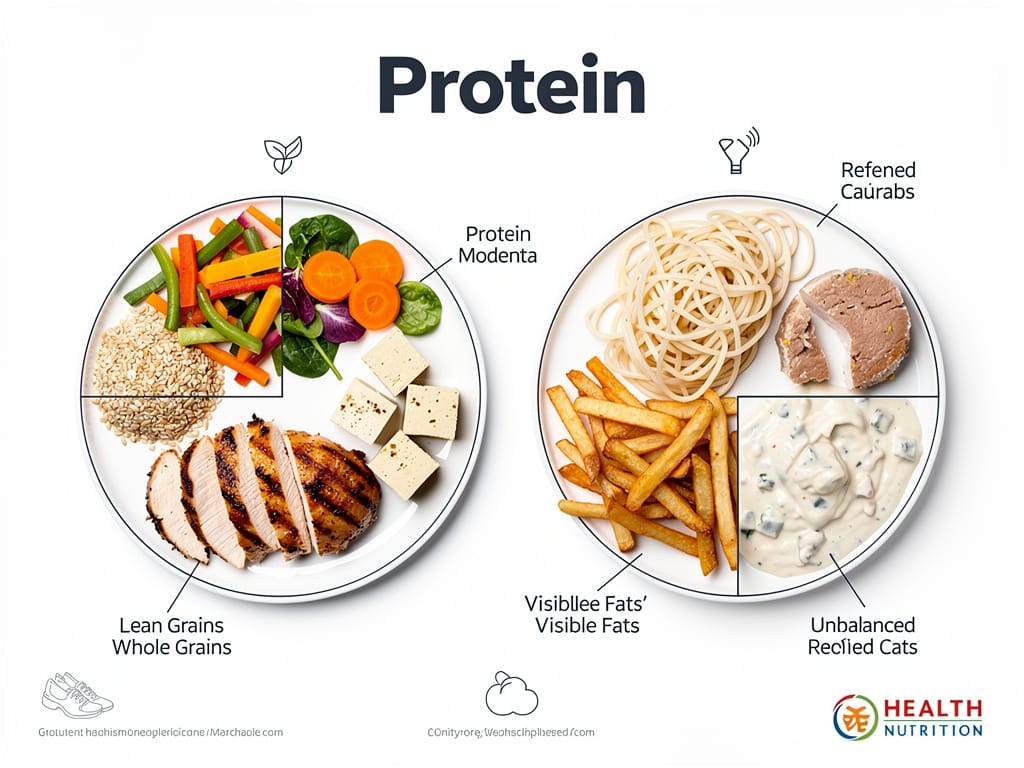
Protein isn't just for bodybuilders. It's the fundamental building block for your muscles, hormones, and enzymes. When you work out from home, you create microscopic tears in your muscle fibers. Protein provides the amino acids necessary to repair that damage and build stronger tissue. Without enough, recovery slows, and you feel sore and weak. Research shows that consuming adequate protein can reduce muscle soreness and improve recovery times by over 25%, a significant advantage when you're trying to stay consistent with your home workouts.
The Numbers Behind Your Hunger and Fatigue
That nagging hunger is not a lack of willpower; it's a hormonal signal. Protein has a profound effect on satiety hormones. It increases levels of peptide YY and GLP-1, hormones that signal fullness to your brain, while simultaneously reducing levels of ghrelin, the hunger hormone. One study demonstrated that increasing protein intake from 15% to 30% of total calories led participants to spontaneously eat 441 fewer calories per day. It's a biological switch for appetite control.
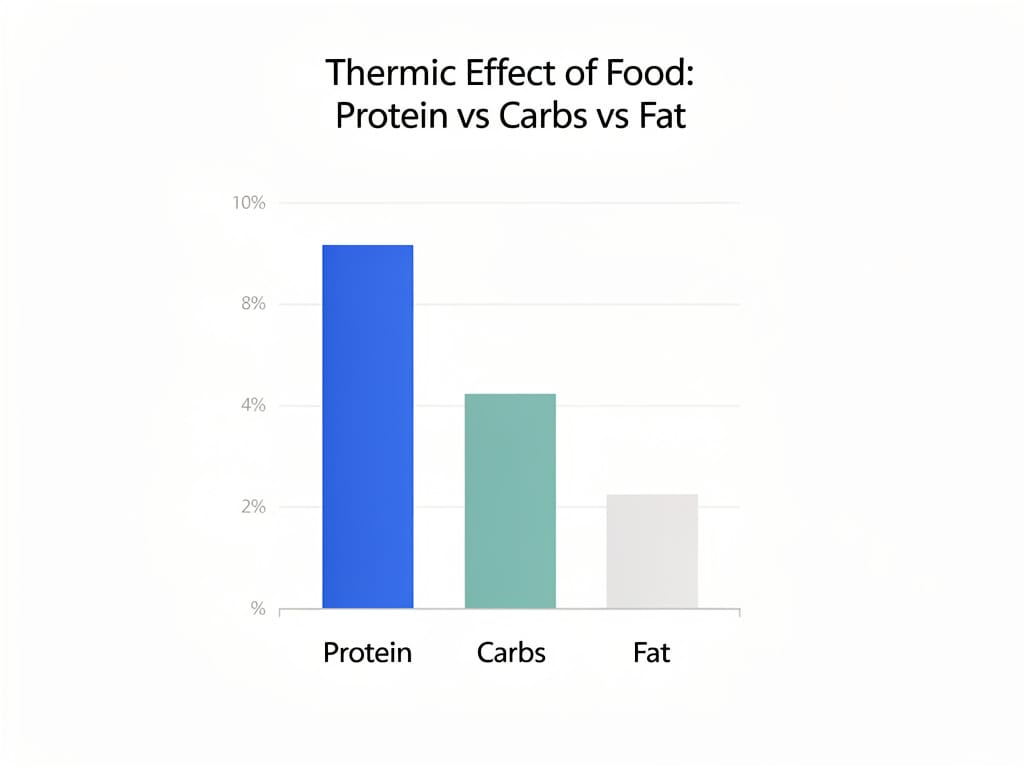
Furthermore, protein has the highest thermic effect of food (TEF) of all macronutrients. Your body uses energy to digest and metabolize what you eat, and it burns significantly more calories processing protein than it does for fats and carbohydrates. Protein has a TEF of 20-30%, compared to just 5-10% for carbs and 0-3% for fats. This means that for every 100 calories of protein you consume, your body uses 20-30 of those calories just to process it, giving your metabolism a natural boost.
Data-Backed Benefits of Adequate Protein
The evidence for optimizing protein intake is overwhelming. It directly impacts your body composition, energy, and overall success with your fitness goals.
Increasing protein intake can lead to significant reductions in body weight and fat mass, with studies showing an average of 1.21 kg more fat loss compared to lower-protein diets.
For muscle growth, consuming around 1.6 grams of protein per kilogram of body weight is shown to be the optimal amount for maximizing muscle protein synthesis in active individuals.
A high-protein diet has been proven to help preserve bone mass during weight loss, with some studies indicating a 50% reduction in age-related bone loss among those with higher intakes.
Boosting protein can improve sleep quality. Research from Purdue University found that participants on a higher-protein weight loss diet reported significantly better sleep after just 4 weeks.
Calculating Your Personal Protein Target
So, how much do you actually need? The generic Recommended Dietary Allowance (RDA) is a modest 0.8 grams of protein per kilogram of body weight, but this is the minimum to prevent deficiency, not the optimal amount for an active person. For those engaged in regular exercise, like our home workout community, the data points to a higher target. The American College of Sports Medicine recommends 1.2 to 1.7 grams of protein per kilogram of body weight per day for active adults. To find your target, simply multiply your weight in kilograms by a number in this range. For a 150-pound (68 kg) person, this means aiming for 82 to 116 grams of protein daily.
The data paints a clear picture. The feeling of being stuck-tired, hungry, and not seeing results-is often not from a lack of effort but from a strategic error in nutrition. Focusing solely on 'clean' foods without quantifying your protein intake is like building a house without enough bricks. You have the blueprint and the work ethic, but you're missing the primary material for construction and repair. Hitting a specific, data-supported protein target transforms your nutrition from a guessing game into a predictable system for success.
Your actionable step is simple: track your food intake for just 3 days using a free app. Don't change anything yet-just gather your baseline data. You will likely discover a significant gap between what you're eating and the optimal 1.2-1.7g/kg target. From there, begin incorporating one more protein-rich food into each meal. A scoop of protein powder in your morning smoothie, a serving of Greek yogurt for a snack, or an extra portion of chicken or lentils at dinner. This single adjustment, backed by a mountain of evidence, is the most powerful change you can make to break the cycle and finally feel energized, satisfied, and strong.
Subscribe to Home Workout Nation for simple fitness and nutrition tips that actually work in real life.
Sources:
This article is based on public health guidance and peer-reviewed sports nutrition research, including MedlinePlus, the Academy of Nutrition and Dietetics, the American College of Sports Medicine, the International Society of Sports Nutrition, and studies on protein intake, satiety, recovery, body composition, sleep quality, and bone health.