The No-Jumping Home Workout That Still Makes You Feel Strong
A quiet, low-impact home workout for busy people who want to build strength without jumping, pounding, or stressing their joints.

Who decided that a good workout had to involve shaking the entire house?
The idea that you need to jump, pound, and leap your way to fitness is a myth. You can build real, functional strength with your feet planted firmly on the ground.
This workout is for anyone who needs a quieter routine - apartment dwellers, parents of sleeping kids, beginners getting back into exercise, or anyone whose joints have had enough of high-impact moves.
This is not about chaos.
It is about control.
Why no-jumping workouts are deceptively powerful
Strength is not just about explosive power.
It is also about resistance, control, balance, and intention.
When you remove the momentum of jumping, your muscles have to do more of the work. Instead of bouncing through the next move, you slow things down and focus on quality.
That is where the challenge comes from.
This type of training often uses something called time under tension, which simply means your muscles stay engaged for longer during each repetition. A slow squat, a controlled glute bridge, or a steady plank can feel surprisingly intense when you stop rushing.
Low-impact does not mean low-effort.
It means you are training with control instead of noise.
Before you begin
Warm up for 2 to 3 minutes before starting.
Try:
- gentle marching in place
- shoulder rolls
- hip circles
- bodyweight good mornings
- easy squats
Move slowly and listen to your body. This workout should feel challenging, but not painful. If any move causes sharp pain, stop and choose an easier variation.
The foundation: mind-muscle connection
Before you start the main circuit, focus on one thing: intention.
The effectiveness of this routine comes from the mind-muscle connection. For every repetition, think about the muscle you are trying to use.
Do not just go through the motions.
Feel your glutes squeeze at the top of a bridge.
Feel your core tighten during a plank.
Feel your legs working as you lower slowly into a squat.
Moving slowly and with focus can transform a simple bodyweight exercise into a powerful strength-building tool.
This is your chance to be present in your body and make every movement count.
Your low-impact strength circuit
Complete the exercises below as a circuit.
Do 3 rounds if you are a beginner.
Do 4 rounds if you want more of a challenge.
Rest for 20 to 40 seconds between exercises as needed. After each full round, rest for about 60 seconds before starting again.
You do not need equipment — just a mat and a little space.
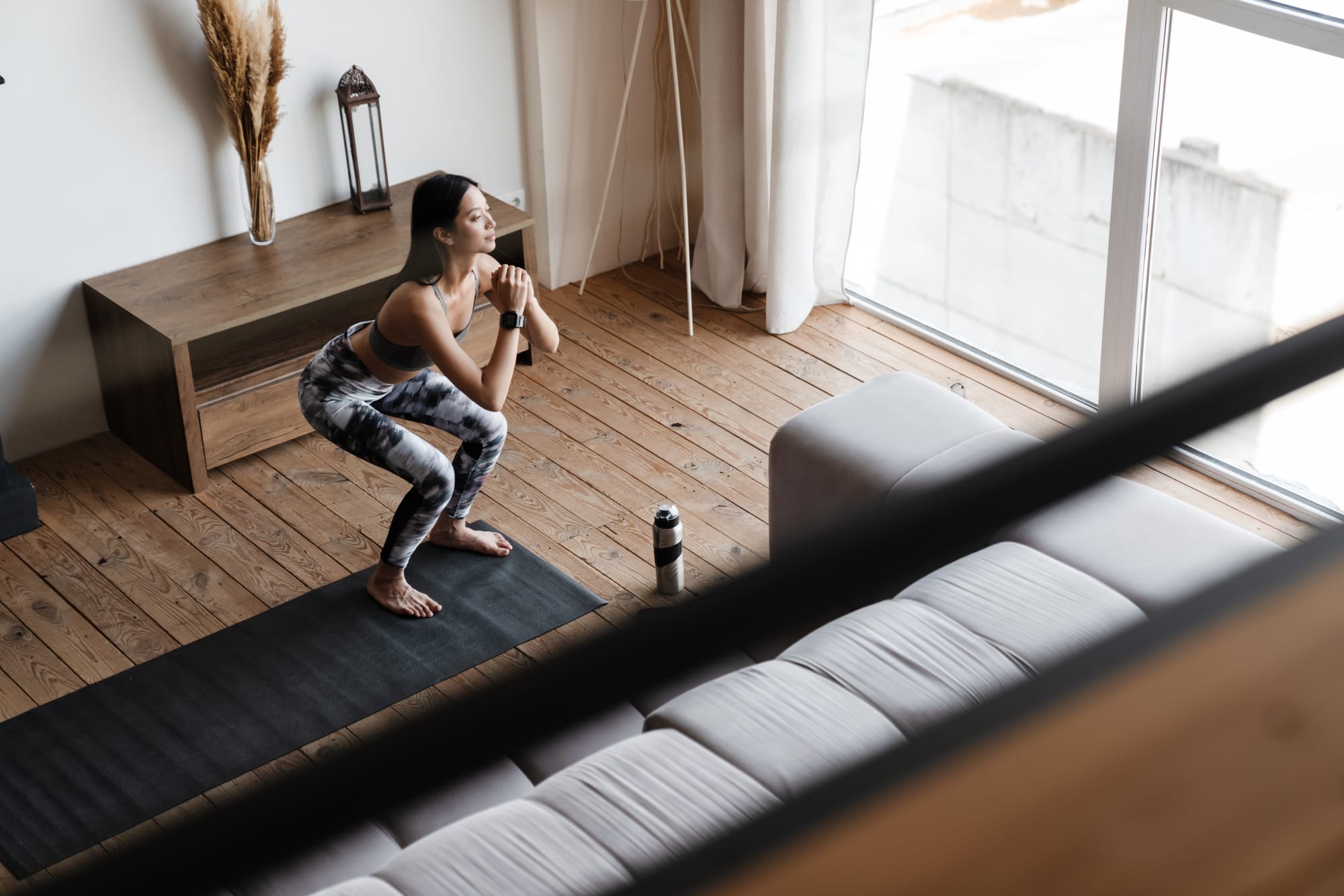
1. Slow-Tempo Bodyweight Squats
Stand with your feet about shoulder-width apart.
Lower yourself down slowly, taking about 3 seconds to reach the bottom of your squat. Keep your chest lifted, your back neutral, and your knees tracking in the same direction as your toes.
Pause for one second at the bottom, then push through your feet to return to standing.
The slow descent is what makes this move powerful.
Aim for: 10 to 12 reps
Make it easier: Sit back onto a chair, then stand up again.
Make it harder: Add a longer pause at the bottom.
2. Glute Bridges
Lie on your back with your knees bent and your feet flat on the floor, close to your glutes.
Press through your heels and lift your hips toward the ceiling. Squeeze your glutes at the top and hold for 2 seconds.
Lower back down with control.
Do not rush the movement and do not let your hips drop suddenly.
Aim for: 12 to 15 reps
Make it easier: Reduce the range of motion.
Make it harder: Slow down the lowering phase.
3. Push-Up Negatives
Start in a high plank position with your hands under your shoulders.
Lower your body toward the floor as slowly as possible, taking about 4 to 5 seconds. Once your chest reaches the floor, push back up from your knees or reset to the high plank however you need.
This focuses on the lowering part of the push-up, which is a great way to build strength.
Aim for: 6 to 8 reps
Make it easier: Do the same movement with your hands elevated on a sofa, counter, or sturdy chair.
Make it harder: Lower even more slowly.
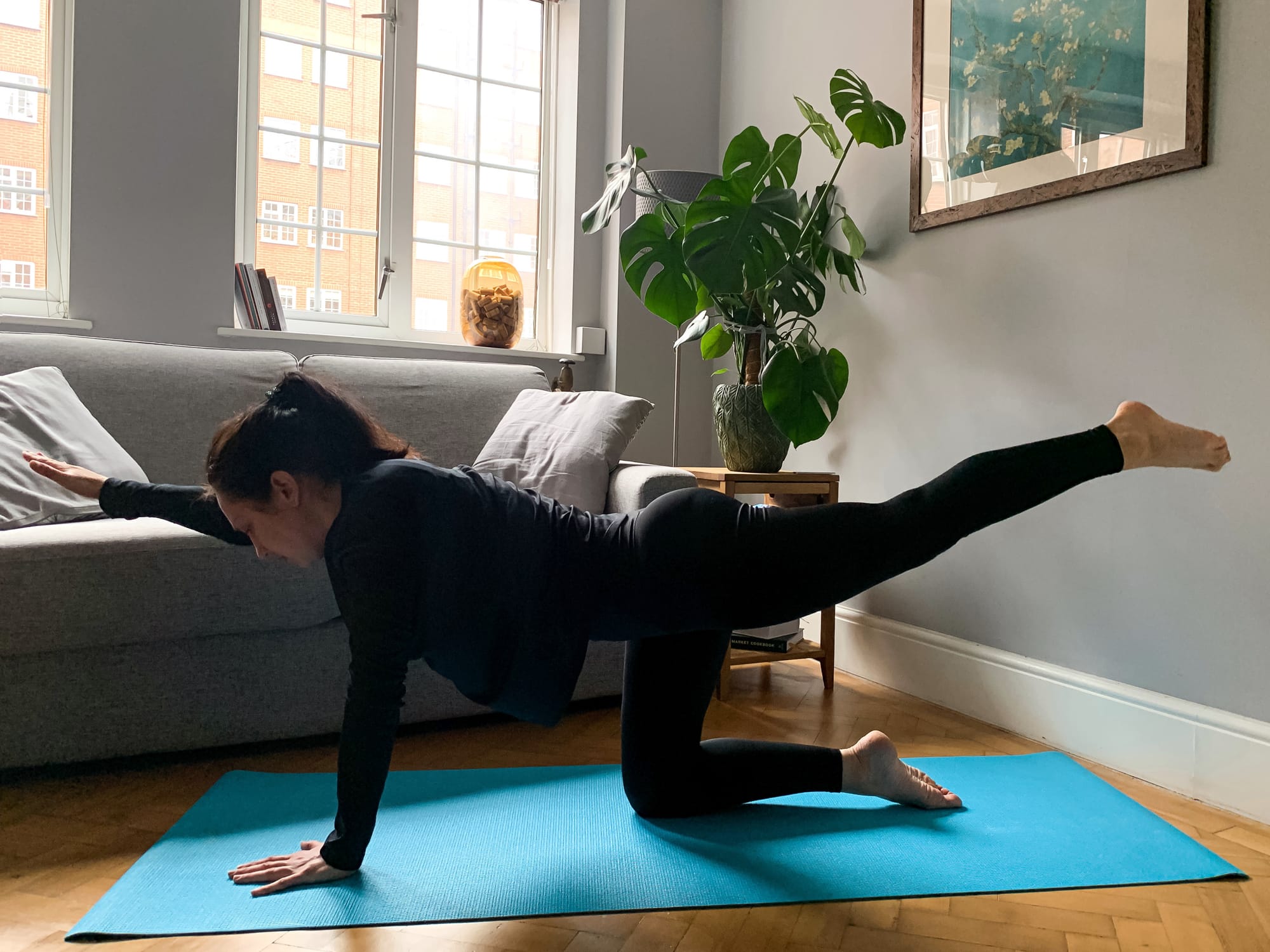
4. Bird-Dog
Start on all fours with your hands under your shoulders and your knees under your hips.
Keep your back flat and your core engaged. Extend your right arm forward and your left leg back at the same time.
Pause for a moment, then return to the starting position with control. Repeat on the other side.
Move slowly and avoid twisting your hips.
Aim for: 10 total reps, 5 per side
Make it easier: Extend only your leg or only your arm.
Make it harder: Hold each rep for 3 seconds.
5. Plank with Shoulder Taps
Start in a strong high plank position with your hands under your shoulders.
Place your feet slightly wider than usual to help with balance. Without letting your hips rock side to side, lift your right hand and tap your left shoulder.
Place it back down, then repeat on the other side.
The goal is to keep your torso as still as possible.
Aim for: 16 to 20 total taps
Make it easier: Perform the movement from your knees.
Make it harder: Bring your feet closer together.
How to make this workout work for you
This routine should feel strong, focused, and controlled - not rushed.
If you are new to exercise, start with 2 rounds and build up gradually. If you are more experienced, slow the movements down and increase the time under tension.
You can also use this workout when:
- you need a quiet routine at home
- you want something apartment-friendly
- your knees or ankles need a break from jumping
- you want strength work without high-impact cardio
- you are getting back into fitness and need something realistic
The goal is not to finish as fast as possible.
The goal is to move well.

Low-impact does not mean easy
One of the biggest myths in fitness is that a workout has to be loud, sweaty, and intense to count.
But a quiet workout can still be challenging.
A slow squat can make your legs shake.
A controlled plank can fire up your core.
A glute bridge can wake up muscles that have been asleep from sitting all day.
You do not need to jump to work hard.
You just need to stay present, move with control, and make each rep count.
Final thought
This routine proves that you do not need to jump, pound, or make a lot of noise to get a strong home workout.
Quiet workouts can still be powerful.
Low-impact can still build strength.
Control can be just as effective as intensity.
True strength is often built in the calm, focused moments where you challenge your body with intention.
So roll out your mat, plant your feet, and start moving.
No jumping required.
Enjoyed this workout? Subscribe to Home Workout Nation for simple home workouts, realistic fitness tips, and motivation that fits real life.